Congressional Republicans are pursuing a third budget reconciliation bill before the midterm elections to fund defense priorities and potentially advance election-security measures, using reconciliation to bypass the Senate filibuster.
This April 15 marks the first Tax Day under the One Big Beautiful Bill Act (OBBBA). Signed into law on July 4, 2025, this landmark legislation introduces significant benefits for the commercial real estate sector. NAIOP was a strong advocate for the commercial real estate industry during the negotiation of OBBBA and has continued to engage with the Treasury Department and the Internal Revenue Service (IRS) as regulations to implement provisions important to NAIOP members have been promulgated.
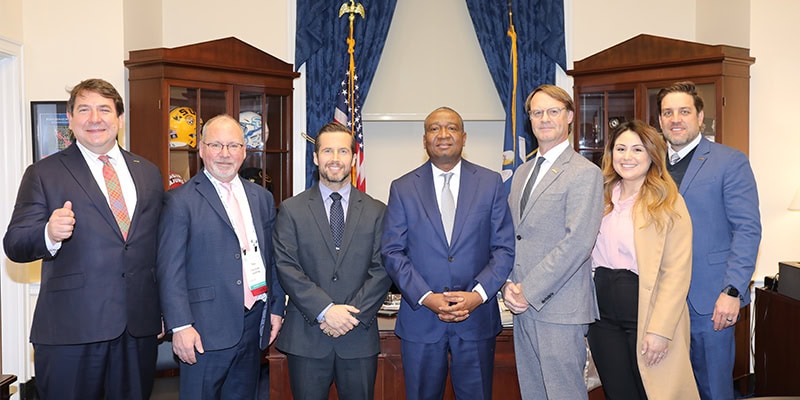
Last week, NAIOP members from chapters across North America came to Washington, D.C., to participate in the 2026 Chapter Leadership & Legislative Retreat. The event capped off on Wednesday with NAIOP’s Capitol Hill Day, when NAIOP members and chapter local executives met with Senate and House members and their staff.
Lawmakers will soon head home for the holiday season. This is a good opportunity to look back on the 119th Congress and see how, despite narrow majorities and other obstacles, Republicans in Washington and President Donald Trump have still managed to put their stamp on federal policy. Their legacy is likely to influence Washington politics for the next generation.
At CRE Converge in Toronto, NAIOP’s Senior Director of Federal Affairs Eric Schmutz dove into the latest federal legislation impacting the commercial real estate industry.
The session centered on a major win for the commercial real estate industry: the One Big Beautiful Bill Act signed this summer. The legislation makes several important provisions permanent while introducing new incentives designed to support investment, development and economic growth.
With trade policy once again taking center stage in the U.S., industrial real estate leaders are watching closely to understand how sweeping tariff changes could reshape supply chains, manufacturing and market demand. Newmark’s Lisa DeNight, managing director for national industrial research, and Charlie Smith, managing director for geopolitical strategy, discussed the implications and shared their predictions at NAIOP’s I.CON East this week in Jersey City, New Jersey.
Last week, Congressional Republicans made significant progress in their efforts to advance President Donald Trump’s tax and spending priorities, with House Republicans agreeing to the 70-page budget blueprint that lays out a fiscal framework for implementing the president’s border security, defense, energy and tax priorities.
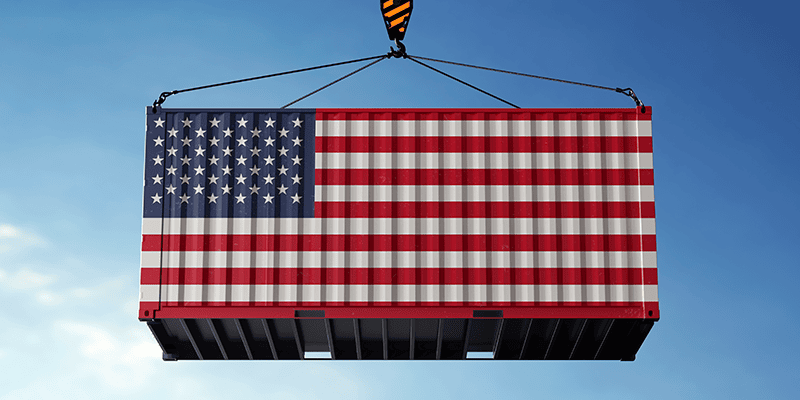
U.S. tariffs have been on the rise over the last several years, often targeting China and affecting global manufacturing with major implications for logistics. If tariffs continue to rise as expected, what will this shift mean for West Coast industrial real estate?
It is normal for the first 100 days of a new administration to create a lot of activity in Washington, but the first six weeks of President Donald Trump’s administration are proving to be busier than normal – and with looming deadlines ahead, things do not appear to be slowing down.
On behalf of our more than 21,000 members, NAIOP Government Affairs has long advocated for federal tax policy that aligns the economics of real estate development and investment, to promote capital formation and foster community development. That is why we have prioritized four provisions that must be included in the future tax law.