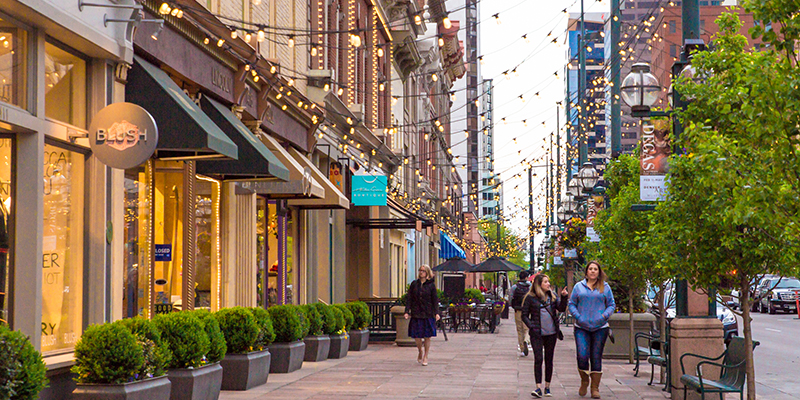
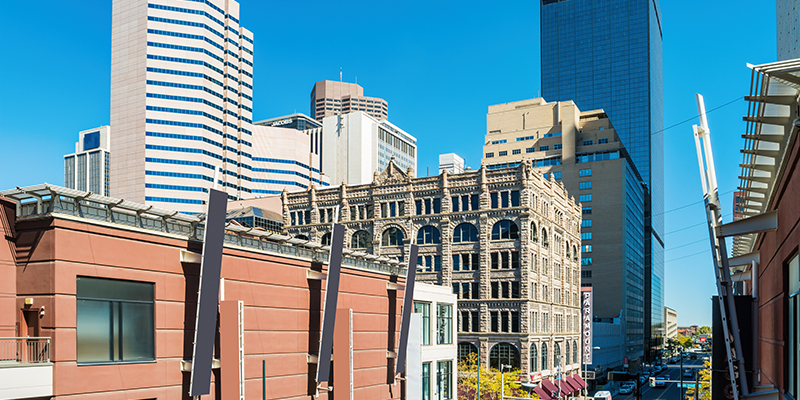
Downtown Denver is changing from a place where people work to a place where people want to live. That was the key takeaway from a walking tour as part of the CREDA Conference that took attendees through several of the city’s adaptive reuse projects. For years, downtown emptied out at the end of the workday. Now, older office towers and other underused buildings are being turned into apartments, bringing residents into the heart of the city.
Living With Character
The tour began at Art Studios, led by Daniel Nichols, project manager and partner, The Nichols Partnership. The building was once home to the Art Institute of Colorado. Today it holds 192 studio apartments for people who want to live downtown at a more attainable price. The design leans into the building’s past. The Nichols Partnership drew on the site’s history and local setting, and art left behind by the school still has a place in the building. The result feels less like a standard apartment complex and more like a home with a deep and rich history.
One lesson from Art Studios stands out: these projects work best with help from the city, which can smooth the path through policy and share some of the cost. The Denver Downtown Development Authority (DDA) plays an important role, offering loans that help make these costly conversions possible.
Building a Neighborhood
The next stops on the tour were led by Jennifer Ramsey, adaptive reuse and downtown project champion for the City of Denver.
At High Fidelity Plaza, Ramsey showed how big these projects can be. Two towers on 17th Street will become 712 apartments, along with a childcare center, a restaurant, shops and a public plaza. The buildings sold for just $3.2 million (roughly $3 per square foot), and the project is backed by a $63 million DDA loan.
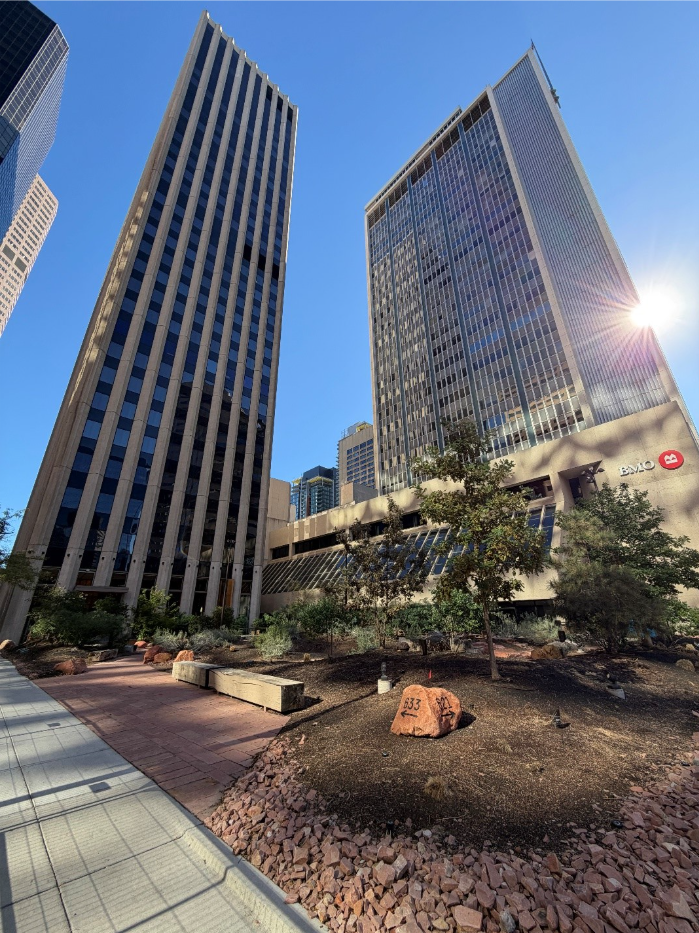
The hope is that the childcare center will help draw young families downtown. A restaurant and plaza give neighbors a place to gather. Each one adds life to streets that used to go quiet after work. Other projects nearby follow the same idea. The Petroleum Building is becoming 178 apartments with a rooftop deck, with help from a $14 million DDA loan. The historic Denver Dry Goods building is in the middle of a $67 million project to add affordable homes for households earning 30% to 80% of the area’s median income.
On the walk back, Ramsey pointed out Denver Energy Center on Broadway. The building sold for $5.25 million, and there are plans to convert it into 386 apartments with a restaurant.
The Bigger Picture
Downtown’s office market is still looking to find its footing post-COVID with more than a third of office space (38.6%) sitting empty in the second quarter of 2026, according to CBRE. That was the first quarterly drop in vacancy since 2024, and more space was leased than vacated for the first time in nearly two years. The recovery is uneven. Companies are moving into the newest buildings in Cherry Creek, and vacancy in top-tier Class A office space is at its lowest level in more than a year. As a result, older towers downtown are being left behind. As older buildings leave the office market, talk of a future shortage of high-quality space is growing.
Conversions address both sides of the problem. They take outdated office space off the market and bring people downtown around the clock. If the trend continues, downtown Denver will be known less for its empty offices and more for the people who call it home.

This post is brought to you by JLL, the social media and conference blog sponsor of the CREDA Conference 2026. Learn more about JLL at www.us.jll.com or www.jll.ca.