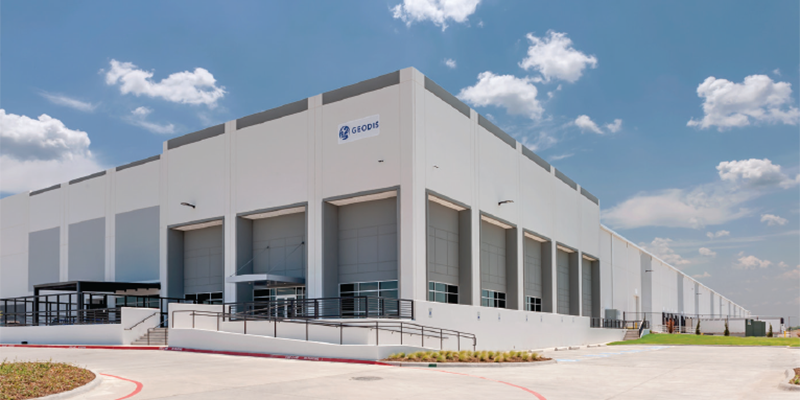
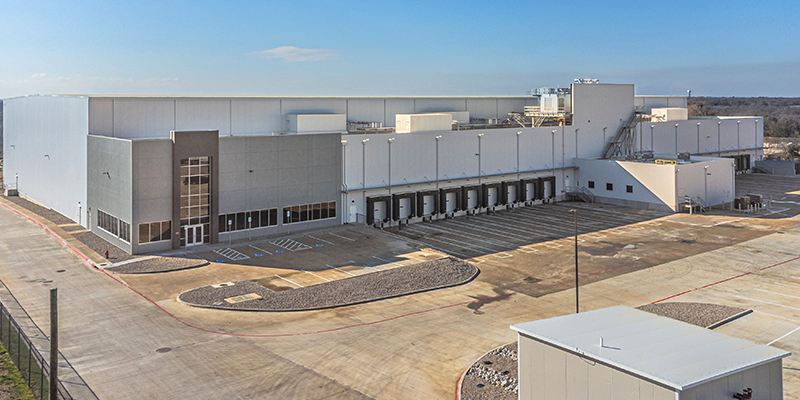
Attendees at the CREDA I.CON Cold Storage conference this week in Dallas had the opportunity to tour Burleson Cold Storage, a new, never-occupied Class A cold storage facility in Burleson, Texas.
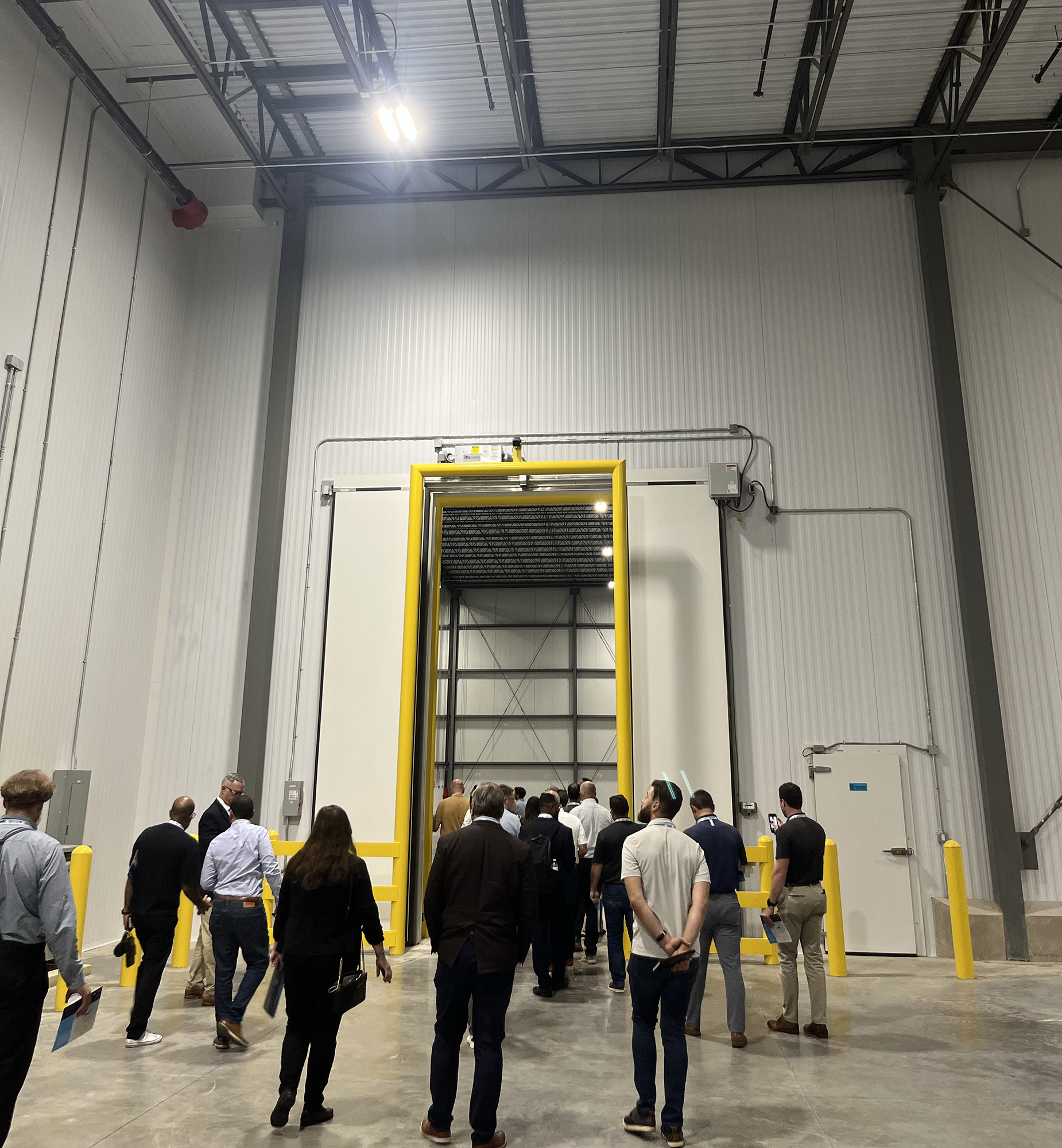
Phase II of Burleson Cold Storage was developed by Saxum Real Estate, expanding on its successful first phase development of a 403,240-square-foot building at the same site, currently operating as Vertical Cold Storage. Phase II consists of two new buildings totaling 427,867 square feet – one at 298,584 square feet and a second at 129,283 square feet. Arcadia Cold Storage & Logistics already leases the larger of the two buildings, leaving the smaller one available.
Now, JLL is ready to lease the available space to as many as two tenants.
Imagining the Space: Slabs and Walls
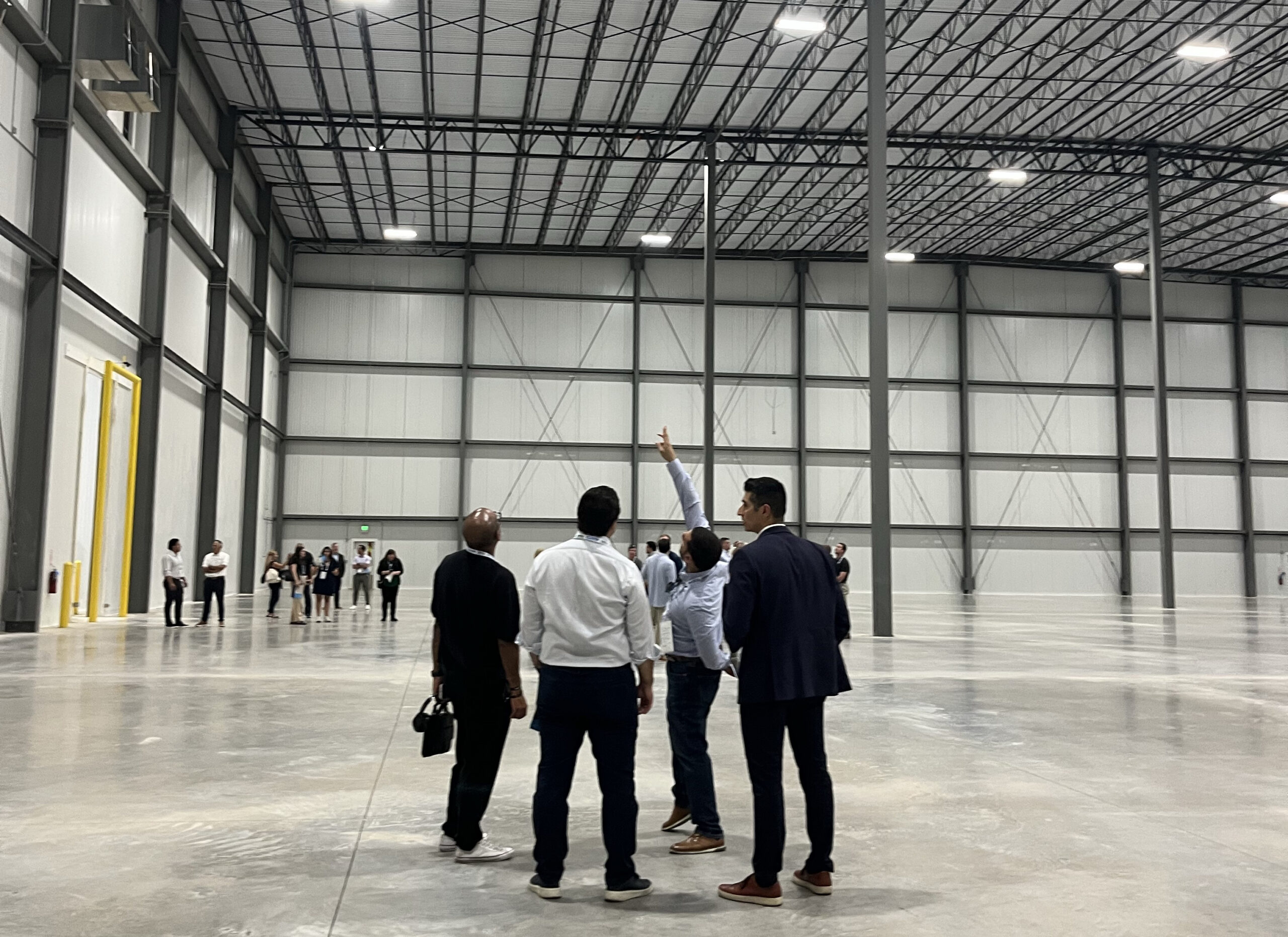
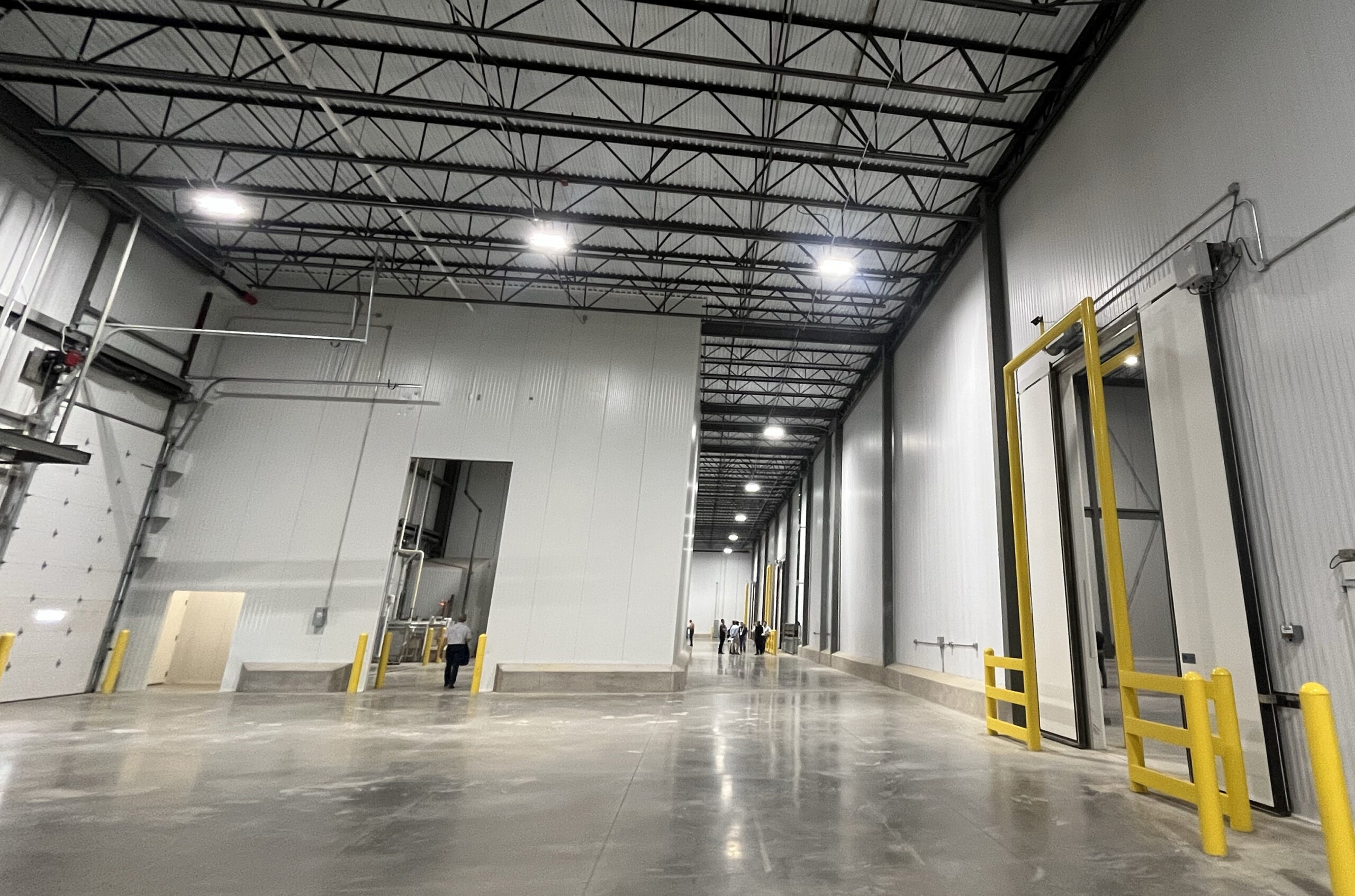
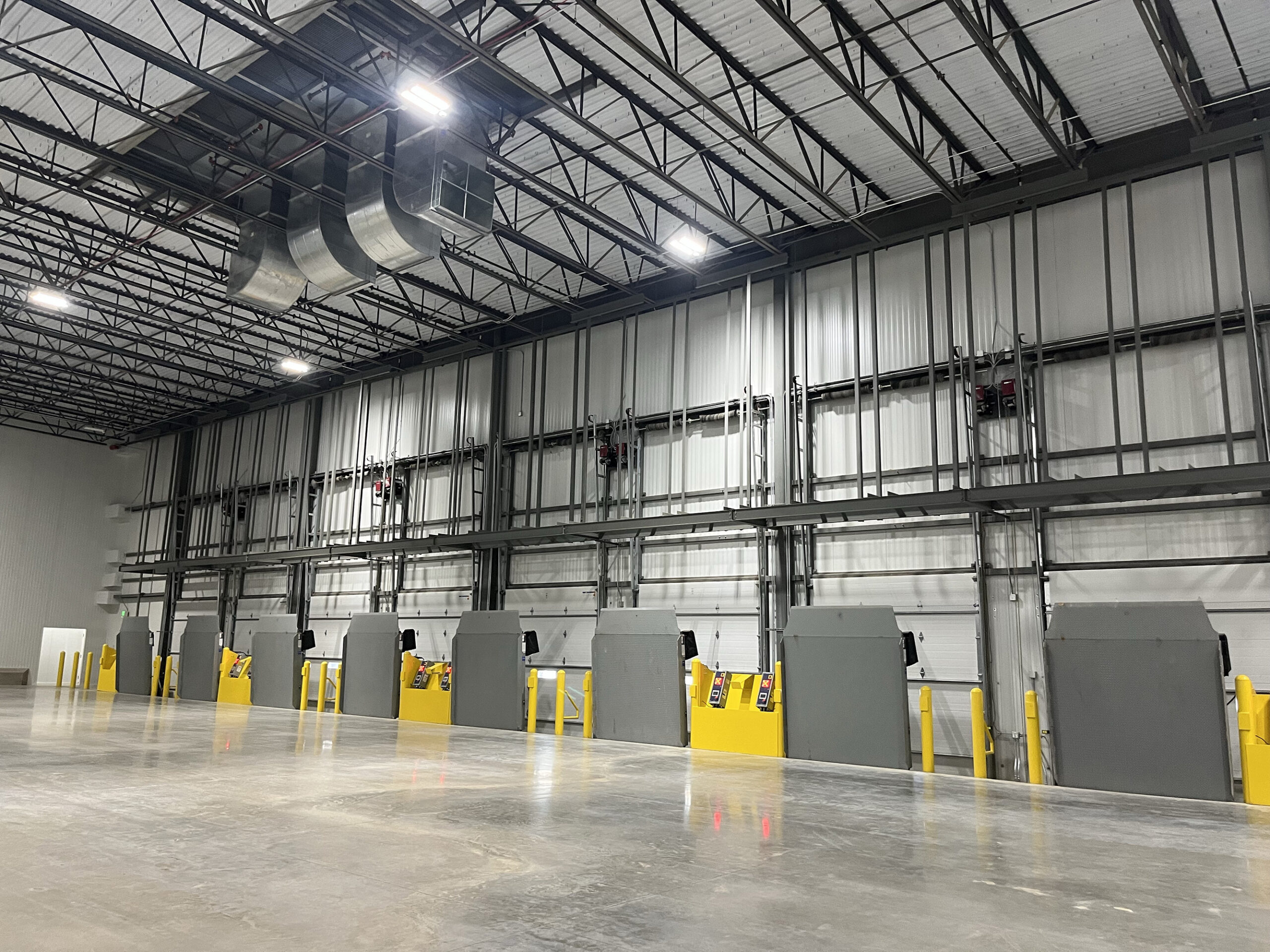
Touring the empty facility offered a unique, insider look before the cold air starts blasting and the space is filled with racks and products. The new space includes 50-foot clear height, 18 exterior dock doors and the capability to run temperatures of minus 10 to 40 degrees Fahrenheit. The space can comfortably fit 16,000 to 18,000 pallets and at its densest can hold about 20,000 pallets.
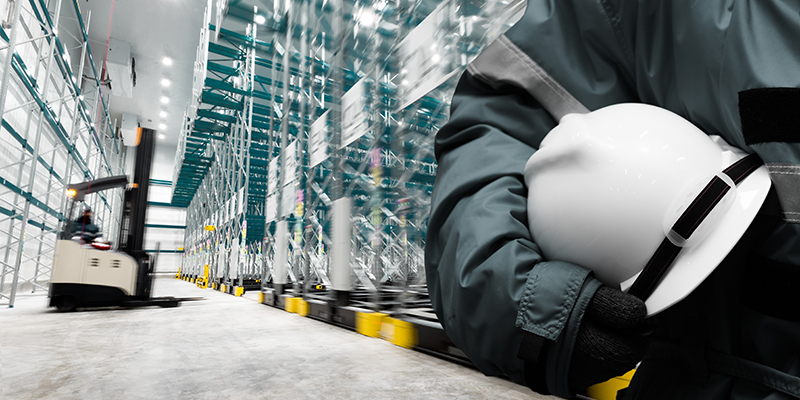
Matthew Wassel, principal at Saxum Real Estate, described the typical scene with pallets up to 7 feet high and racks at 12 feet. The racking itself is structural and supports the building’s roof. But not all products are racked. Fast-turning produce arriving from Mexico, for example, might be floor-stacked for as little as 36 hours before it is pushed back out.
Burleson is built to be flexible. The space loosely resembles a hotel ballroom before the retractable walls are drawn shut. It is one continuous space that can be demised cleanly into two tenant units. That flexibility extends to tenant type as well. The building suits food and beverage distributors, third-party logistics providers and grocery distributors.
Flexibility in Refrigeration
Flexibility is inherent in the building’s core function: keeping products cold. Ed Whitby, business development executive at Innovative Refrigeration Systems Inc., said the company is “happy to cascade almost any type of refrigerant according to a tenant’s requests.” In addition to ammonia, the traditional cold storage refrigerant, the company can use carbon dioxide, another natural refrigerant. At the time of the tour, the system was filled with nitrogen for pressure testing and was not yet in service. It stays under nitrogen until it is charged with refrigerant, keeping moisture out of the lines, a detail that highlights how much engineering goes into keeping a refrigeration system reliable long-term.
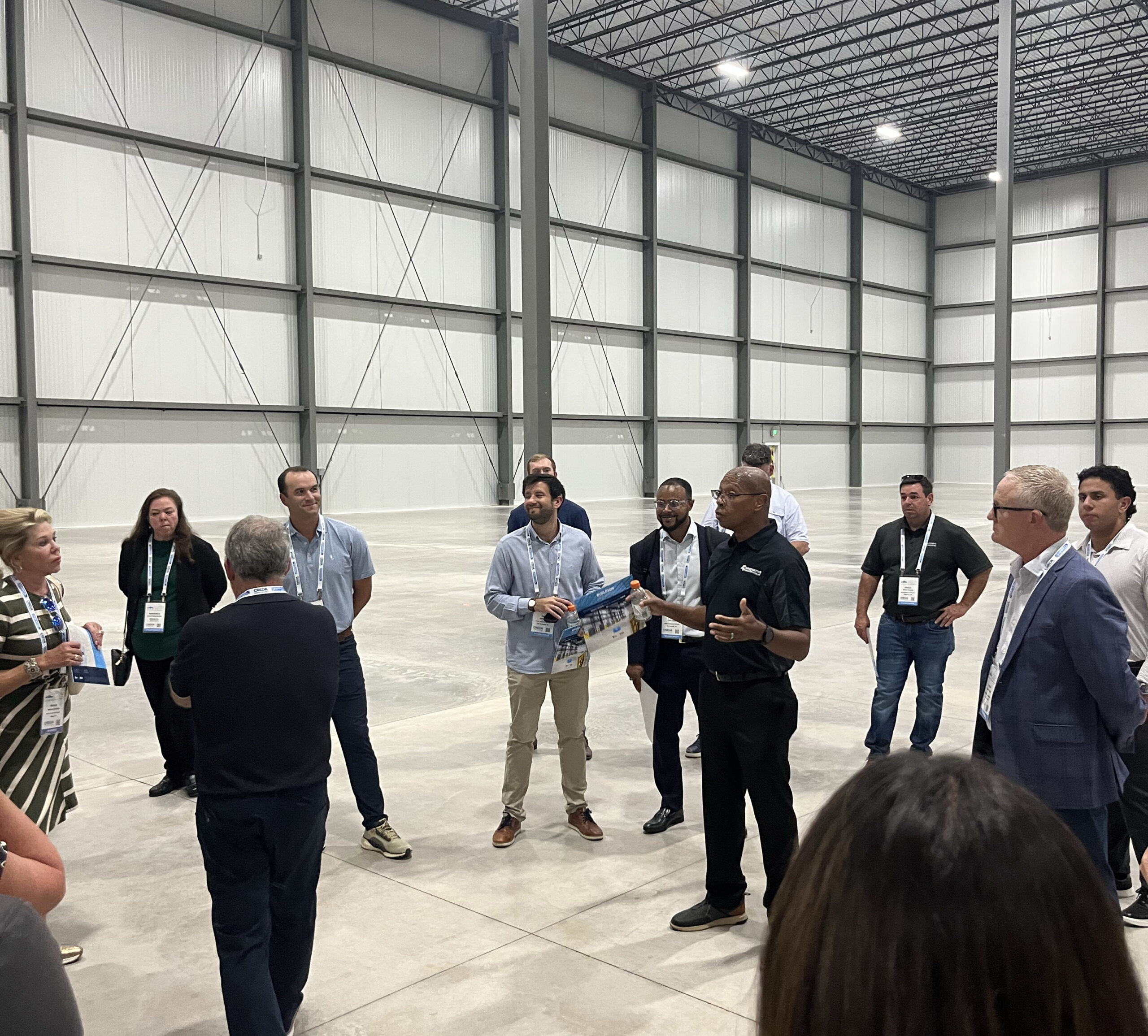
Different refrigerants also come with different costs for both the tenant and the building. Wassel said that the property leases on a triple net (NNN) basis, so the tenant pays base rent plus its share of certain operating expenses, like property taxes and insurance. In this case, the maintenance of refrigeration systems can also pass through to tenants as common area maintenance. As Whitby noted, ammonia carries added compliance obligations in a handful of states that CO2 systems would not, costs that tenants may want to weigh alongside base rent and other lease expenses.
The discussion around triple net leases and maintenance prompted a question: how is maintenance handled when two tenants share certain systems? It’s a question that won’t be answered until two tenants have signed leases.
Automation on the Horizon?
As attendees visualized a full cold storage facility with 50-foot clearance, some recognized the infrastructure met the 36- to 40-foot requirement for automated systems like robotics. When asked if tenants have been interested in automation, Kevin Griffiths, senior vice president at JLL, said they have not, adding “I’ve seen a lot of automation fail.” He has seen operators revert to conventional systems after automation cost them inventory and money. “The technology is not there today. It may be in five to 10 years.”
Burleson as a Prime Development Site
Attendees were curious about the experience of developing the project in the city of Burleson, specifically. Griffiths said the city has been incredibly supportive, helping source tenants and working through power and water usage at the site. Burleson also offers lower property taxes than other parts of Dallas-Fort Worth, while holding a prime location along Interstate 35W, about 20 miles south of Fort Worth.
The discussion offered a firsthand look at the decisions behind cold storage development, including site selection, construction, regulatory compliance, leasing and long-term maintenance. It was also a rare chance to see a Class A cold storage building in the brief time before a tenant fills it with racks, product and cold air.
This post is brought to you by JLL, the social media and conference blog sponsor of CREDA’s I.CON Cold Storage. Learn more about JLL at www.us.jll.com or www.jll.ca.