As office vacancy remains elevated in many markets, developers across the country are asking the same question: How can obsolete office buildings be successfully repositioned for new uses?
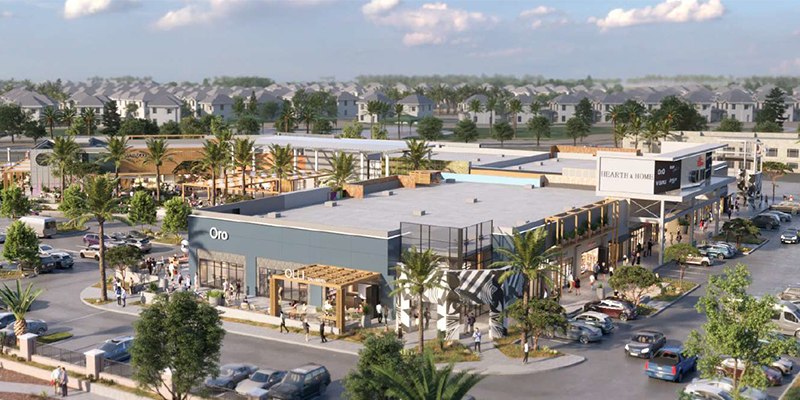
On a recent episode of the Inside CRE podcast, Steve Neiger, managing principal at CAST and 2026 president of CREDA Southern Nevada, shared lessons from The Cliff at Green Valley Ranch, a $55 million office-to-retail conversion transforming an aging suburban office campus into a vibrant destination for dining, retail, wellness and entertainment.
His experience offers valuable insights for developers evaluating adaptive reuse opportunities in today’s market.
The unique challenges of adaptive reuse
While adaptive reuse is often viewed as a solution for obsolete office buildings, Neiger says existing properties present a very different set of challenges than ground-up development.
“Adaptive reuse can feel like opening Pandora’s box,” he said. “The biggest struggle with making adaptive reuse pencil comes down to time and cost.”
Unlike new construction, adaptive reuse projects must contend with aging building systems, existing infrastructure, zoning considerations, evolving building codes and lengthy entitlement processes – all of which bring uncertainty to project schedules and budgets.
Those delays can significantly affect returns.
“In the brokerage world, we always say time kills deals,” Neiger said.
Start with market fundamentals
For developers considering an office-to-retail conversion or other adaptive reuse project, Neiger believes success starts long before design begins.
For The Cliff at Green Valley Ranch, rather than focusing on what an existing building could become, his team first evaluated whether the surrounding market could support a premium lifestyle destination.
Located at the intersection of two major highways in Henderson, Nevada, The Cliff benefits from strong demographics, exceptional visibility and an underserved trade area.
“The more you looked at the fundamentals,” Neiger said, “the more excited [we] got about the project.”
Only after confirming the market opportunity did the team determine what level of investment the project could support. By working backward from achievable rents and projected net operating income, they created a redevelopment plan grounded in financial feasibility rather than wishful thinking.
More than filling vacant space
The Cliff demonstrates that successful office redevelopment isn’t simply about replacing office tenants with retail tenants.
Instead, Neiger’s team focused on creating a destination with a carefully curated mix of restaurants, retail, health and wellness businesses that reinforce one another.
“We are calling it ‘Henderson’s new center of gravity,’” he said.
Rather than accepting the first lease opportunities, the team remained disciplined in selecting tenants whose brands and customer base aligned with the project’s long-term vision.
The result is a lifestyle-oriented development designed to generate sustained traffic and create value for both tenants and visitors.
Modernized regulations could unlock more opportunities
One of the biggest obstacles facing adaptive reuse projects isn’t the building itself – it’s the approval process.
Neiger noted that The Cliff should have taken 12 to 18 months to reach the construction phase but instead required nearly three years because of entitlement and permitting delays.
“I don’t think municipalities understand how the erosion of [Internal Rate of Return] can really discourage folks from doing these kinds of projects,” he said.
As more communities seek solutions for obsolete office buildings, Neiger believes local governments have an opportunity to modernize development processes and remove unnecessary barriers while maintaining appropriate public safeguards.
He pointed to Maricopa County, Arizona, which recently eliminated dozens of pages from its development code – an example other jurisdictions could follow.
“I would like for us all to get to a point where we call Maricopa County an inspiration and not the exception,” he said.
Lessons learned
As demand for traditional office space continues to evolve, adaptive reuse will play an increasingly important role in redevelopment.
Neiger encourages developers evaluating office-to-retail conversions or other adaptive reuse opportunities to remain disciplined, prioritize strong market fundamentals and focus on communities experiencing sustained economic and population growth.
“Growth is the key to our industry,” he said. “Growth will always happen wherever it’s easiest and best to do business.”
Projects like The Cliff demonstrate that while adaptive reuse of obsolete office buildings is rarely easy, the right location, thoughtful planning and patient execution can transform underperforming assets into thriving commercial real estate destinations.
Listen to the full episode of the Inside CRE podcast.
This post was created with the assistance of AI tools; all content was reviewed by the author.
Featured photo courtesy CAST.